
Name Tracing Worksheets
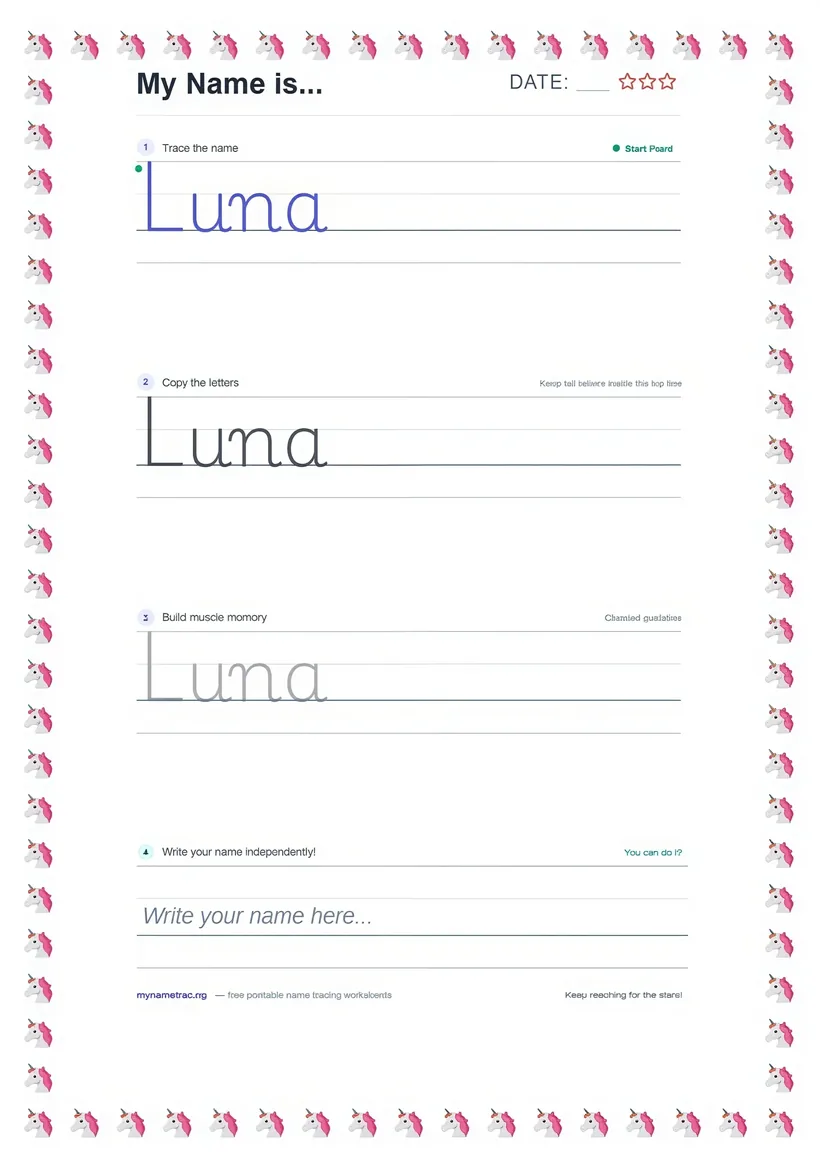
Type any name and get a printable tracing worksheet with four-line handwriting guides — in seconds, on Letter or A4.

How Muscle Memory Transforms Early Literacy
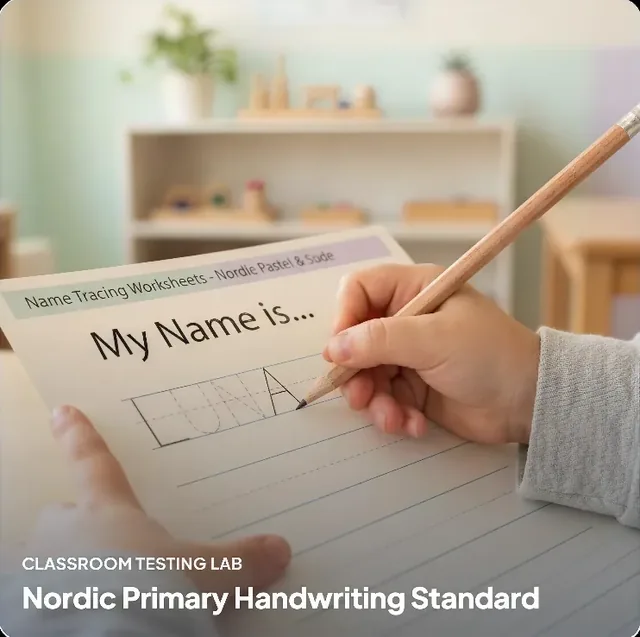
Watch a five-year-old trace their name and you'll see real work: eyes following the outline, fingers adjusting their grip, a small pause at every corner. That is muscle memory forming. Four-line guides keep every letter the same size and in the same place, so what starts on the sheet becomes writing on blank paper.
- Start every letter in the right spot
- Keep sizes even from the first row to the last
- Carry the practice over to blank paper
More ways to practice
Same engine, different strokes. Each generator prints with the same four-line guides, so work looks consistent across the whole set.
Why these name tracing worksheets work

Find the right starting point
By Grade Level
Sheets scale from chunky Pre-K letters to tighter 2nd-grade rows — pick a grade and the sizing follows.
Letter Styles
Eight school handwriting fonts — from US Trad and Modern to dotted-trace and arrow-stroke guides.
For Teachers
Generate a full class set in one PDF — paste or upload up to 30 names at once.
At-Home Practice
Five-minute sessions that fit real family life — one sheet, a crayon, and a fridge door for the finished ones.
From First Scribbles to Confident Signatures
Start with tracing
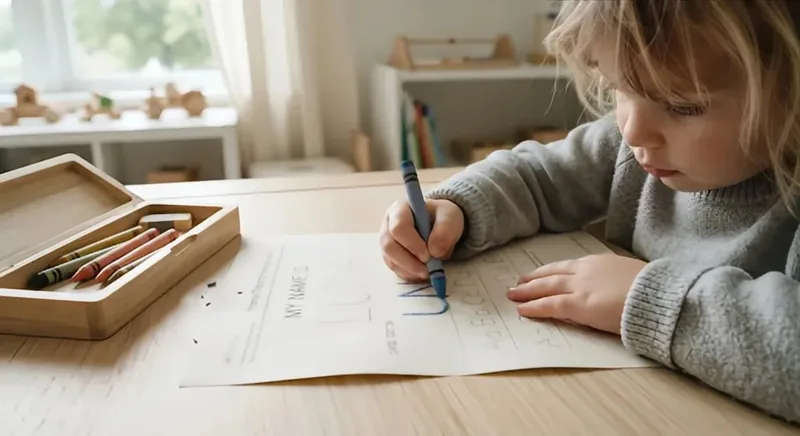
Dotted outlines guide the first attempts — any pencil or crayon works, at home or on the go.
Built for the classroom
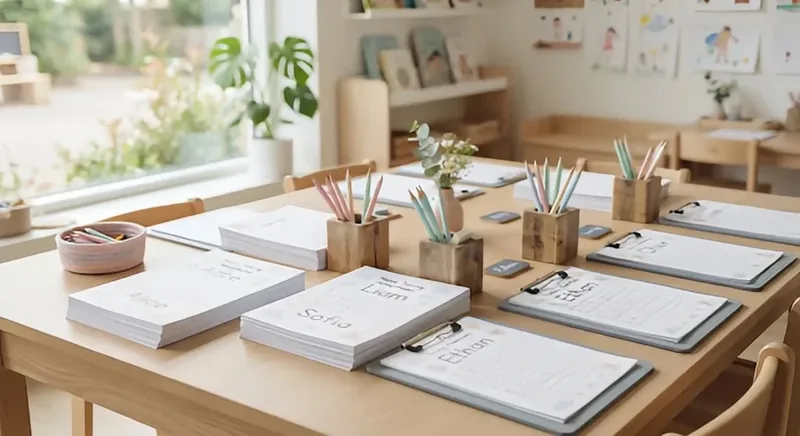
Batch-generate a full class set in one PDF — for morning work, literacy rotations, or homeschool desks.

Celebrate milestones
A finished name is a real achievement — print it, hang it, and let the pride show.
What's inside every name tracing worksheet
Whether you print one sheet or a full class set, every page is built from the same teaching structure.
Name tracing FAQ
The questions parents and teachers ask most about our worksheets.
Is the name tracing generator free?
Yes — every one of these free printable name tracing worksheets can be generated, printed and downloaded without an account, watermark or daily limit.
Do I need to create an account?
No. The generator runs entirely in your browser; nothing is uploaded and nothing is stored.
How do I use the worksheet generator?
Three steps, about thirty seconds: type the name (or tap a popular-name button — accents like é and ñ are supported), pick a style — font, grade preset and paper size, with a live preview — then print straight from the browser or save the PDF.
Why use a generator instead of a pre-made pack?
Pre-made packs almost never contain the name you need. A generator builds the sheet for your child's exact letters, keeps the same four-line guides on every page, and lets you reprint as often as it takes — or bump the difficulty a grade up when it starts looking easy.
Which font should I choose?
Both fonts share the same guides and blank practice cells, so it's purely about letterforms. US Modern is upright and print-style, matching what children see in picture books — the usual pick for preschool and kindergarten. US Trad is gently slanted with entry strokes, bridging toward connected handwriting in 1st grade. When in doubt: Modern for reading age, Trad for handwriting age.
What age should children start?
Most children are ready between three and a half and four and a half — the honest test is whether they can hold a crayon and copy a circle. Pre-K uses very large letters with generous spacing, kindergarten gets the classic four-row worksheet, and 1st–2nd grade moves to five or six smaller rows on notebook-sized guides. If a size frustrates, size up; if it's raced through, size down before adding words.
How long should a practice session last?
Short and regular beats long and rare: five focused minutes twice a week is plenty for preschoolers, and kindergartners can stretch to ten. The better measure is the sheet itself — when the last letters stop looking better than the first, stop for the day. Keep finished sheets: seeing their own progress a week later motivates more than any sticker chart.
How do I print at the correct scale?
In the print dialog set Actual size / 100% — not "Fit to page". Every sheet carries a calibration ruler along the bottom: measure it after printing, and at exactly 100 mm your guides are true to size.
Which paper size should I choose — Letter or A4?
Letter (8.5×11 in) for the US and Canada, A4 for most other countries. Each worksheet is generated natively for its paper size, so nothing is ever stretched or cropped.
Can I make worksheets for Spanish or accented names?
Yes — José, María, Sofía and Renée all render correctly in both fonts, with accents placed where a handwriting teacher would put them. Hyphenated and double-barrelled names (Anna-Lisa, Mary Jane) also work: each part keeps its own tracing cells on the same guides.
Can I use the worksheets in my classroom?
Yes. Free printable name tracing worksheets from this site may be used for personal, classroom and tutoring purposes. You may not resell them or republish them as your own.
Does the name tracing generator support dotted letters and arrows?
Yes — switch Letter style to Dots for dotted tracing letters, or to Outline & Numbers for hollow letters with numbered stroke-order arrows. Both work with any name or word, in every grade preset.
Can I print name tracing worksheets for a whole class?
Yes. Open the Batch panel, paste or upload a class list (.txt or .csv), and the generator builds one multi-page PDF with every child's name on the same guides — morning work sorted in under a minute.